












Face oils and moisturisers can often get squashed into the same category of skincare. Both are replenishing. Both are a great addition to any good skincare routine. But both play very different roles.
What’s The Difference Between Face Oils And Face Moisturiser
The main difference between these two skincare steps comes down to the formula—and how they interact with the skin.
Here’s a quick refresher on each.
What Is Moisturiser
Moisturisers are an essential skincare step for any and all skin types, designed to provide a protective layer to stop moisture from escaping.
The Ingredients
Moisturisers contain water-soluble ingredients that work to hydrate the skin. Water-soluble ingredients (like hyaluronic acid, glycerin, pink algae) replenish your skin’s hydration levels and ward off dehydration. Most of these ingredients are humectants, which means they trap water from the air into the skin to keep everything plump and juicy.
Some moisturisers also contain oil-soluble ingredients (like oils, ceramides) which help replenish your skin as well. Dry skin is caused by your skin not producing enough oil (caused by hormones, genetics, ageing), and these types of ingredients work to make up for what your skin’s not producing itself.
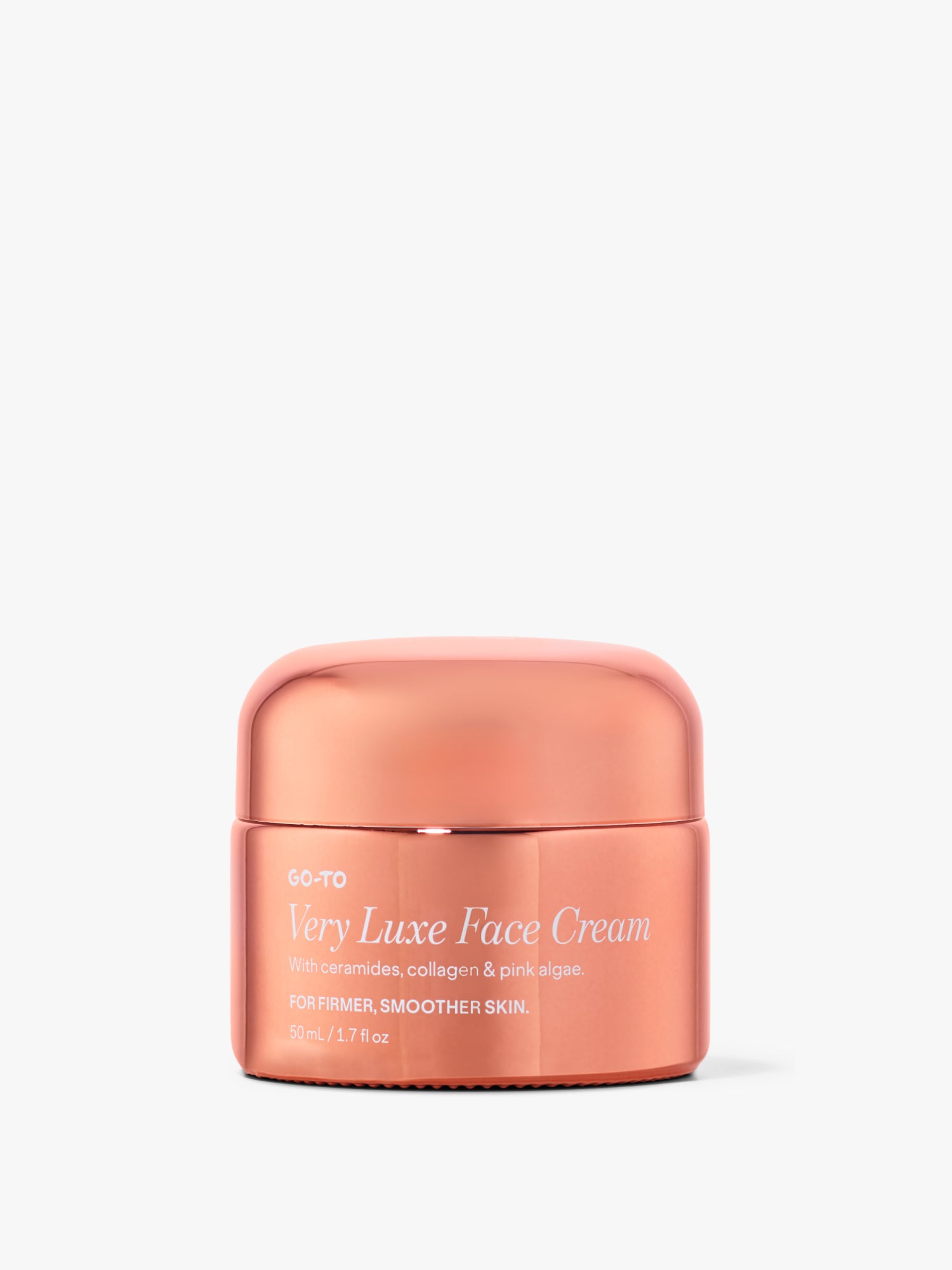
Some moisturisers will have both water-soluable and oil-soluable ingredients (like Very Useful Face Cream or Very Luxe Face Cream) and some will stir clear of oil (like Very Lightweight Moisturiser).
The Texture
Moisturiser adds a protective layer to your skin, designed to prevent transepidermal water loss (TEWL). Your skin is made up of a combination of skin cells (think of these as the bricks) and lipids (that’s the mortar). Like any building job, tiny microscopic cracks form between these cells, allowing moisture to escape.
By finishing your skincare routine with a layer of moisturiser, you smooth over those cracks and add a sort-of surface film that helps keep your skin replenished and moisturised.
What Is Face Oil?
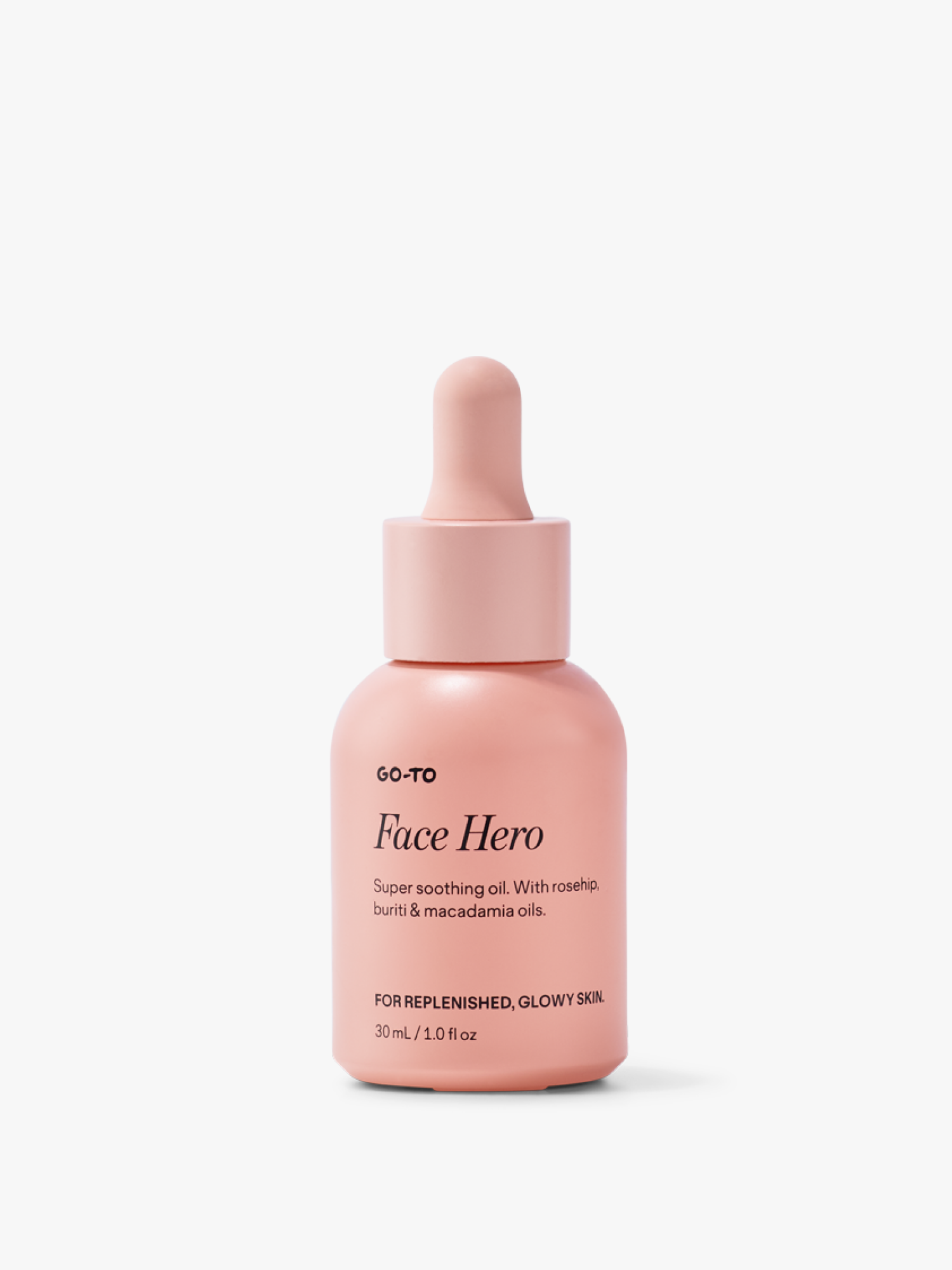
Face oil is designed to replenish the lipids your skin naturally produces. Rather than primarily adding a protective barrier, face oil helps strengthen your skin barrier to leave your complexion soft and supple.The Ingredients
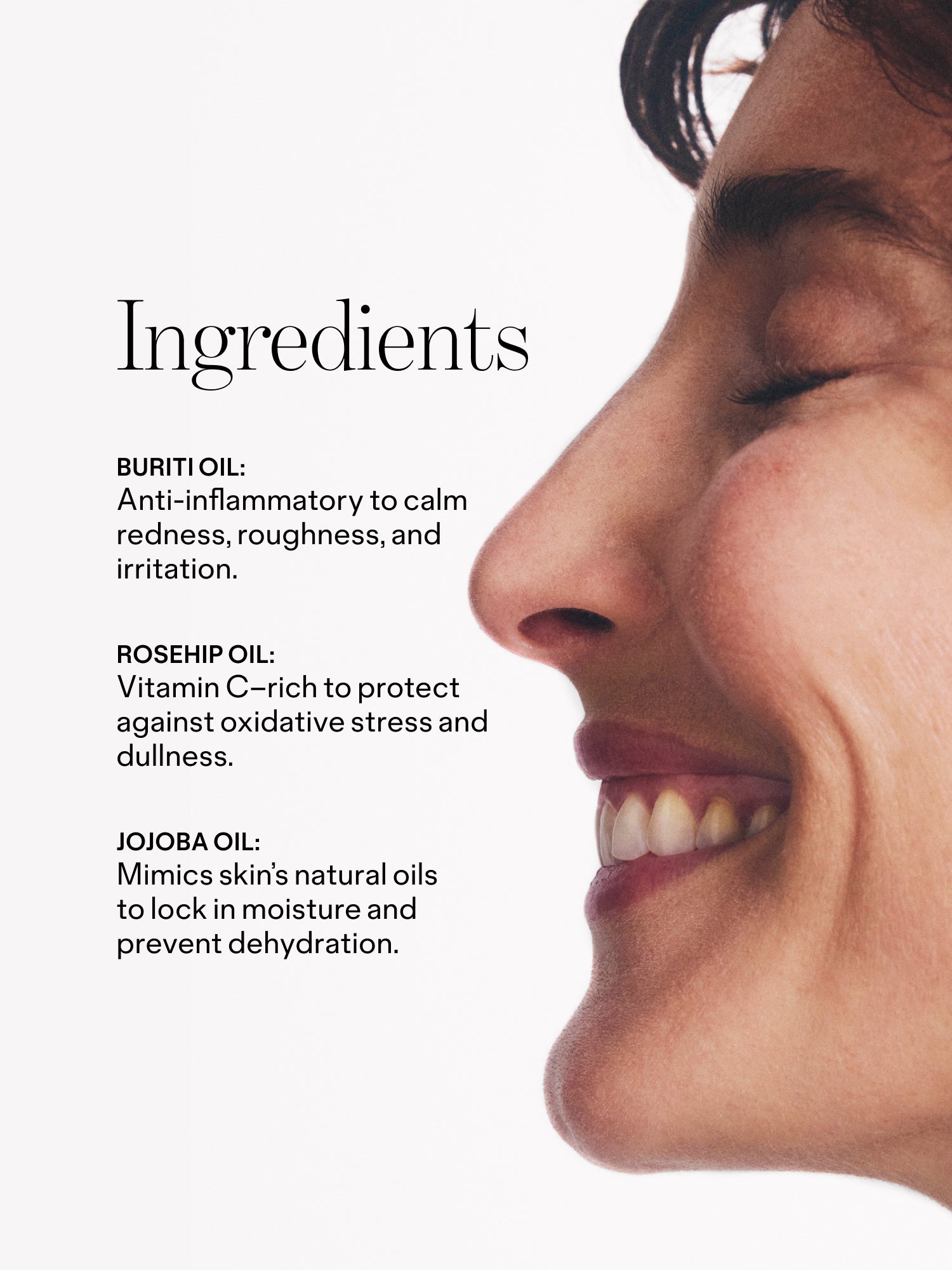
Face oils are made up of oil-soluble ingredients that keeps your barrier strong and happy. They do this by mimicking or topping up the natural oils your skin produces.
Dryness isn’t always about lacking water, it can be about lacking oil. When your skin doesn’t produce enough sebum, those tiny gaps in your barrier become more obvious—leading to flaking, tightness, and irritation. Face oils step in to help replace what’s missing and reinforce the skin barrier.
Some face oils are made purely of single oils (like rosehip or jojoba), while others are carefully blended cocktails designed to target specific concerns. Think brightening, soothing, or blemish treating.
The Texture
Unlike moisturisers (which contain water), face oils are anhydrous—meaning they don’t hydrate the skin directly. Instead, they nourish it. When applied before moisturiser, they soften and condition the skin, reinforcing the lipid “mortar” that sits between your skin cells (the bricks).
By replenishing those gaps first with a face oil, you strengthen the barrier and prep the skin. Your moisturiser then goes on top to lock everything in.
When To Use Moisturiser
Every day! This is the step that locks your skincare in, to keep your complexion comfortable and protected. No matter your skin type (yes, even oily), moisturiser is essential.
When To Use Face Oil
Use face oil when your skin needs targeted treatment, extra nourishment, or barrier support. That might mean a richer oil to comfort dry, depleted skin—or a lightweight treatment dry oil (like one formulated for blemish-prone types) to help balance, clarify, and support stressed-out complexions.
Applied before moisturiser, face oil works to replenish lipids and deliver those more active ingredients, without necessarily feeling heavy or greasy.
For oily skin types, just a face oil might provide enough of a protective barrier to your skin and can be used solo.
When To Use Both
Use both for added support and nourishment. Apply face oil first, then follow with moisturiser to seal in hydration and finish the job. The gameplan here is treatment first, seal second.
TLDR;
In short: Moisturiser hydrates and seals, while face oil nourishes and strengthens. One delivers and locks in water; the other replenishes lipids and supports your skin barrier. Use together for balanced, bouncier, glowier skin—or solo, depending on what you need. Your face, your choice.
Comments