














Sunscreen! It might come with bucketloads of important information, confusing numbers, and different varieties—but one thing remains clear: you should be using it. Like everyday.
Still need some convincing? We’ve put together an obscenely thorough guide to all things sunscreen to help you make smart sunsafe choices. Let’s dive in!







What SPF Means And How To Choose The Right Level?
Look, you probably know the basics, The higher the number that follows ‘SPF’ the better it is at protecting your skin.
Here’s some important facts about sunscreen! Sunscreen protects your skin from UV radiation by helping to block the rays. The SPF acronym itself: stands for: Sun Protection Factor. And this number indicates the amount of potential UV radiation that is reaching the skin when sunscreen is applied according to directions. For example, SPF 30 is estimated to filter 96.7% of UV radiation (meaning only 1/30th is reaching the skin). Which means SPF 50 is estimated to filter 98% of UV radiation (so only 1/50th is reaching the skin).
You might then notice a plus (+) next to some sun protection factor ratings. Cancer Council advises this means ‘more than’. Sunscreen labeled as SPF 50+ must have shown results of SPF 60 or more, removing any margin of errors and ensuring you are very much protected beyond what the bottle says.
So rapid fire, higher number, smaller percentage of radiation affecting your skin.
Of course, when we’re dealing with these teeny fractions, it can all feel like much of a muchness. But spanning a lifetime, these numbers truly add up.
Under controlled conditions, like the labs that these sunscreens are initially tested in, a sunscreen with higher SPF and broad spectrum coverage (filters both UVA and UVB rays) will be proven to offer more protection against sunburn.
But sadly: life ain’t like a lab. Our application of sunscreen doesn't mimic the ideal conditions of a lab. We tend to stay out in the sun longer, not apply as much as we think, and sometimes skimp on reapplication too.
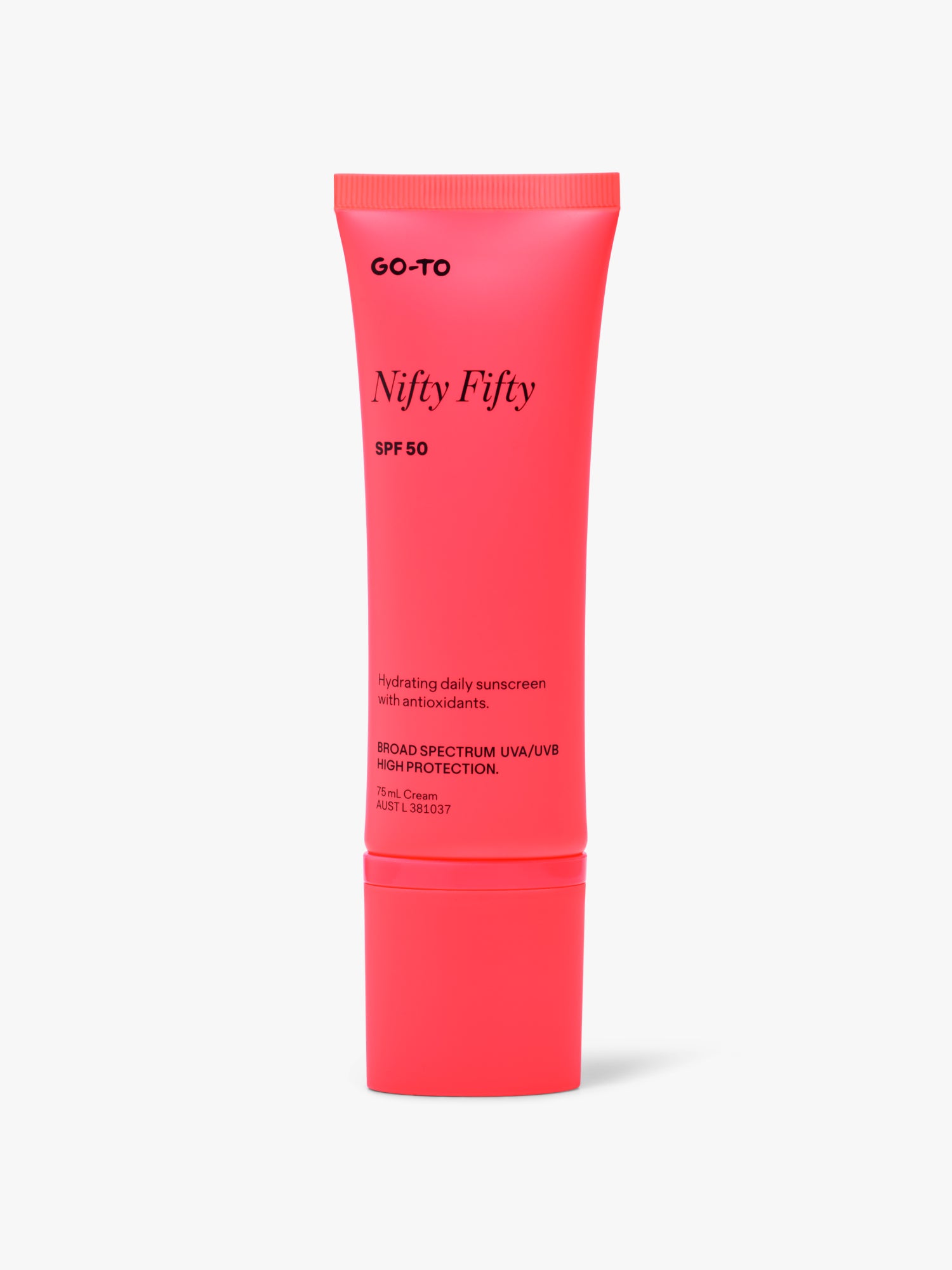
That’s why the Cancer Council recommends broad spectrum sunscreen that is SPF50 or SPF50+.
How To Apply Sunscreen Correctly For Full Protection
It is recommended to use about a teaspoon (5 mLs) for each area. (Ie. across your face and neck, your arms and legs, and your chest and back. So a total of 35 mL of sunscreen all up. (Or seven teaspoons all up. That’s about a shot glass-worth of sunscreen.
We recommend applying sunscreen 20 minutes before you head outdoors and reapplying every two hours. But if you’re swimming or exercising, we recommend reapplying more often, as sunscreen can easily be wiped off or get lost when you sweat or swim.
Apply cream liberally to exposed skin 20 minutes before sun exposure.
Avoid prolonged sun exposure and wear protective clothing, eyewear and a hat. Remember, sunscreen is only one component of sun protection.
How Often Should You Reapply Sunscreen
Reapply sunscreen every two hours or more often if necessary, and after swimming, excessive sweating or toweling
But what if you’re using water resistant sunscreen? Water-resistant means the sunscreen maintains its effectiveness while swimming or sweating but not indefinitely. Swimming or sweating break down the protective barrier of your sunscreen, meaning you still need to reapply.
Chemical Vs Mineral Sunscreen: Which Should You Use?
Both types of filters work by absorbing UV, while mineral ones also reflect a small percent of the UV.
Their differences between chemical and mineral sunscreens lie mostly in their chemical structure and how they are made.
Chemical or organic UV filters contain carbon in their structure, while physical or inorganic UV filters do not contain carbon in their structure.
Plus! Chemical UV filters are completely synthetically made, whereas physical UV filters are minerals found in nature that are then altered to be able to be used in a sunscreen.
Common Sunscreen Mistakes That Leave Your Skin Unprotected
-
Not Wearing Enough: Most people don’t apply enough sunscreen to get the SPF protection listed on the label. Be generous and cover all exposed skin evenly.
-
Not Reapplying: Sunscreen wears off throughout the day, especially after swimming, sweating, or towelling off. Reapply every two hours for continued protection.
-
Not Using In Winter: UV rays are present year-round, even on cloudy or cold days. Daily sunscreen use is essential no matter the season.
-
Only Using Sunscreen: face SPF is only one part of the sun protection puzzle. Don’t forget to wear your hat, sunglasses, and protective clothing, while limiting your time in the sun.
How To Make Sunscreen Part Of Your Daily Skincare Routine
Find one you love to wear and wear it. The best sunscreen is the one you’ll actually apply every day, so look for a formula that suits your skin type and fits seamlessly into your routine.
Apply it as the final step in your morning skincare routine, after moisturiser and before primer/makeup, and keep it somewhere visible as a daily reminder.
Consistency is key.
Which Sunscreen Is Best For Your Skin Type (Oily, Dry, Sensitive)
The right sunscreen should feel good on your skin, so you actually want to wear it every
Oily or breakout-prone skin may prefer lightweight, non-comedogenic formulas with a matte finish.
Dry skin types often benefit from hydrating sunscreens packed with moisturising ingredients, while sensitive skin may feel more comfortable with fragrance-free or mineral formulas designed to minimise irritation.
Sensitive skin can prefer a zinc-based formula as zinc has soothing properties.
Whatever your skin type, broad-spectrum SPF 50 is always a good place to start.
Do You Really Need Sunscreen Indoors Or In Winter?
Yes! UV rays never take the season off.
UVA rays (they’re the ones that contribute to premature skin ageing) can still penetrate clouds and windows, meaning your skin is still exposed indoors, during winter, and even on overcast days.
Daily sunscreen use helps protect your skin year-round, not just during summer or long days outside. Think of SPF as a crucial (non-negotiable!) step in your daily skincare routine.
ALWAYS READ THE LABEL AND FOLLOW THE DIRECTIONS FOR USE.
Avoid prolonged sun exposure, wear protective clothing, eyewear, a hat, and make sure you reapply frequently in accordance with directions. Remember, sunscreen is only one component of sun protection. For external use only. Do not use on damaged or broken skin. Avoid contact with eyes. If irritation occurs, discontinue use.
Comments